
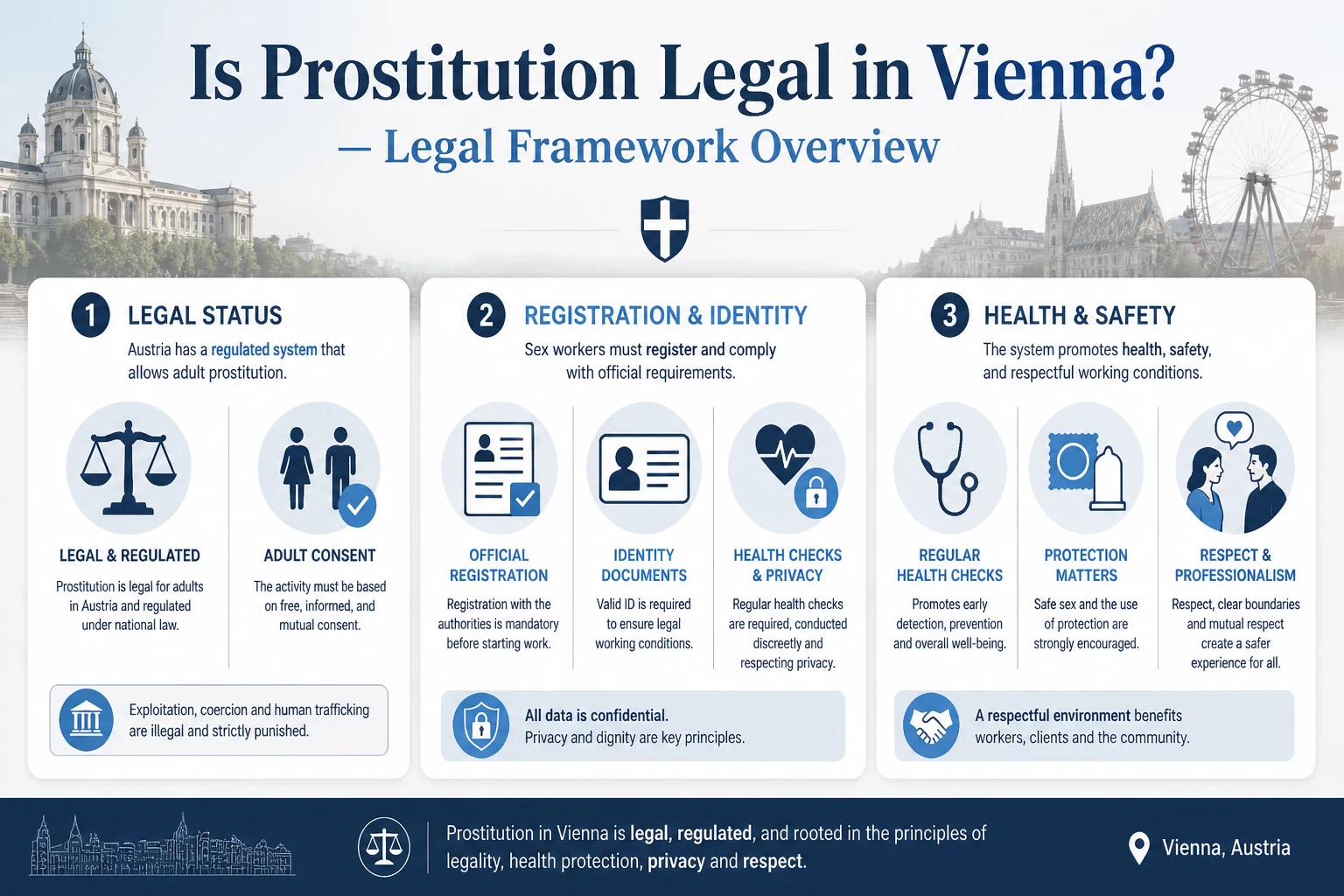
Yes. Prostitution is legal in Vienna, but it operates within a regulated framework. Sex workers may offer sexual services as adults, and clients may pay for them, provided the people and businesses involved follow Austrian and Viennese rules.
For visitors, the practical distinction is simple. A licensed venue, a consenting adult sex worker and a straightforward transaction are part of the legal system. Unlicensed premises, coercion, exploitation and involvement of minors are not. The setting matters as much as the service itself, and a polished advert alone is no proof that an arrangement is lawful.

A legal but regulated trade
Austria does not treat prostitution as an automatically illegal activity. Vienna permits it under rules covering the women who work, the businesses that host them and the places where services may be offered. The system is designed to make adult sex work visible to the authorities rather than push every form of it underground.
That does not mean every flat, hotel room or advertised service is lawful. A venue generally needs the appropriate permission to operate, while sex workers must meet registration and health-related requirements. Vienna’s official information gives the clearest public outline of the city’s framework, local restrictions and responsibilities. Rules can change, so visitors who need the current position should read the City of Vienna information on prostitution.
Registration and identity
Sex workers who work legally are expected to register with the relevant authorities. Registration is part of the administrative system and helps establish that the person is an adult who is entitled to work in the activity. It is not a licence for a client to demand private documents, photograph records or ask intrusive questions about a worker’s private life.
The paperwork can include identity documents, registration records and evidence connected with health requirements. The precise process depends on the person’s circumstances and current rules. A useful practical guide to documents needed to work legally in a Vienna brothel explains why reputable venues take administration seriously.
For a client, registration is mainly a sign that the venue is operating within a recognised framework. It does not remove the need for courtesy or consent. Sex workers remain entitled to set their own boundaries, refuse a request and end an encounter without having to justify the decision.
Health checks and safer practice
Regular health checks are a central part of the Austrian system for sex workers. They are intended to monitor certain infectious diseases and support public health. A worker may need current health documentation to work legally, and inspections can examine whether the required certificates are present.
Health checks are not a guarantee that no infection is possible, and they do not replace sensible safer-sex practice. Clients should respect a worker’s boundaries, use protection as agreed and never treat a certificate as permission to ignore consent. The subject is covered in more detail in this guide to health checks in Austrian brothels.
A responsible venue should have clear expectations about protection and hygiene. Clients should arrive sober enough to make decisions, avoid pressuring anyone to change agreed terms and speak up politely if something is unclear. Health information is private, and a worker should not be expected to discuss personal medical details with a stranger.
Licensed venues
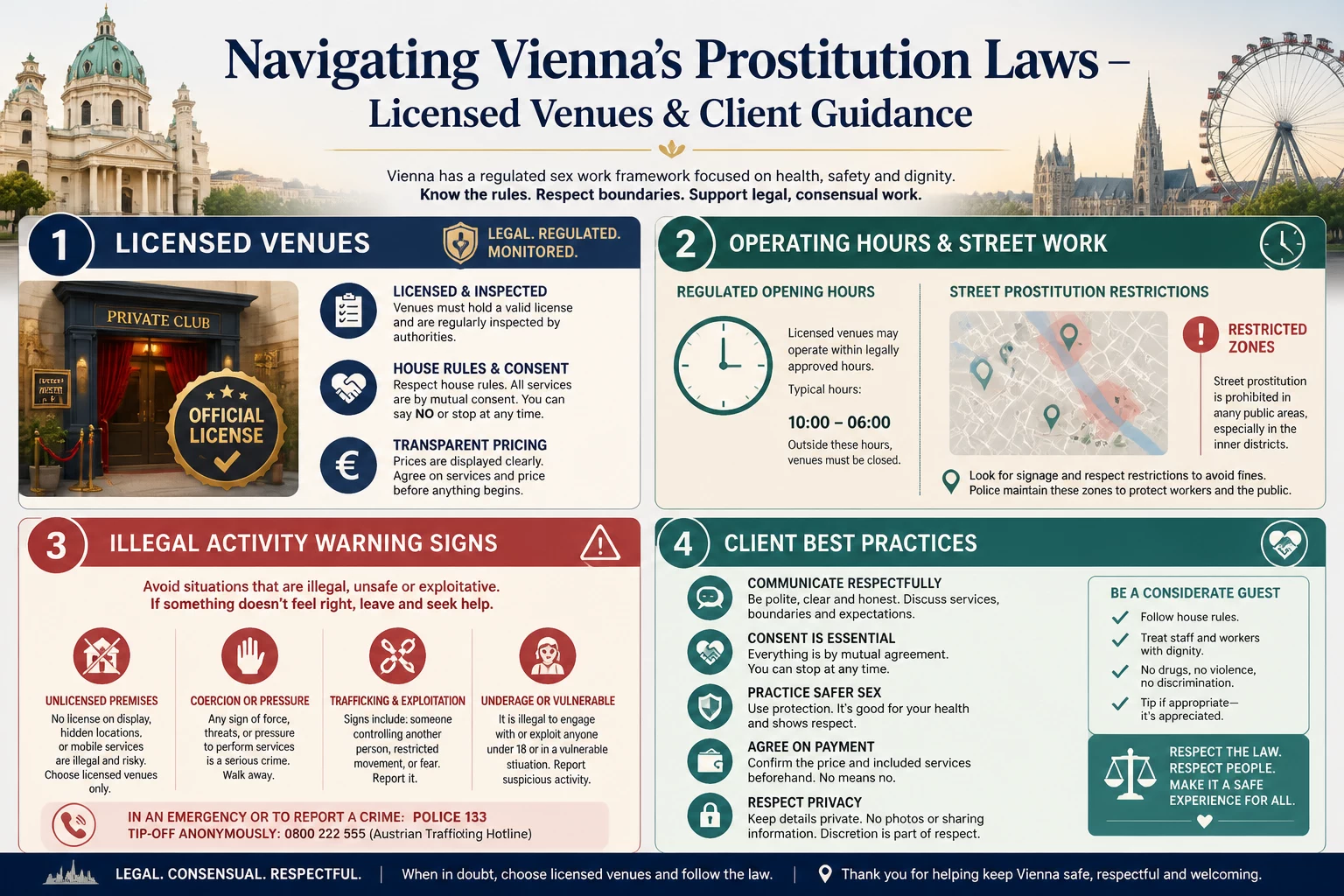
Licensed brothels and similar venues are expected to comply with local business, safety and operating rules. They provide a recognised place for adult services, with management responsible for the premises and the people working there. That structure is one reason visitors generally find established venues more straightforward than informal online arrangements.
A legal venue should present clear house rules, deal openly with payment and allow the women to work without pressure from clients. Staff should be able to explain the general arrangement before a visitor commits to anything. The setting may range from a traditional brothel to a club-style establishment. A high-end licensed option such as Maxim Wien illustrates the kind of formal venue visitors may encounter, although atmosphere, services and charges differ between houses.
Licensed does not mean that every individual action inside a venue is acceptable. A client still needs clear consent, must follow house rules and should pay the agreed amount rather than attempting to renegotiate afterwards. Likewise, a venue’s staff should not pressure a visitor into spending beyond what was agreed or make unclear claims about additional charges.
Opening times and street work
Licensed businesses cannot simply operate whenever they choose. Opening times and local operating conditions are subject to regulation, with rules affecting when venues may receive clients and how they must function. For a clearer explanation of the practical side, see this guide to opening hours for Vienna brothels.
Street prostitution is also not permitted everywhere in the city. It is restricted to designated areas and permitted times, with additional limits intended to protect residents, businesses and public spaces. A person being visible in a public place does not by itself mean that approaching them is lawful. Visitors should avoid residential streets, transport areas and any location where solicitation is prohibited.
These restrictions are practical as well as legal. A visitor who approaches someone in the wrong place may disturb residents, create a confrontation or attract police attention. Established venues are easier to understand because the location, management and basic operating arrangements are visible from the start.
What crosses the line
Illegal prostitution can involve an unlicensed premises, working without the required registration or health documentation, or operating in a prohibited public area. The legal risk may concern the operator or worker rather than the client, but an informal setting can still expose a visitor to fraud, police attention, unsafe conditions or disputes about payment.
The serious offences are exploitation, coercion, trafficking and any involvement of minors. A client must never use a service where someone appears pressured, controlled or unable to give free consent. Stories about the growth of unlicensed activity help explain why the distinction matters, including this report on legal brothels and the rise of illegal prostitution.
Warning signs include a person being closely monitored, someone else controlling every conversation, unexplained changes to the agreed terms or pressure to ignore protection. A client should leave rather than investigate personally. If there appears to be an immediate danger, contact the police or emergency services instead of confronting an organiser or attempting to take control of the situation.
What this means for clients
For a visitor, the sensible approach is uncomplicated. Choose an established venue, read its rules, agree the price and boundaries before anything begins, and pay only as agreed. Consent must remain present throughout, and either person may stop. Respectful conduct is not merely good manners. It is part of staying on the lawful side of the transaction.
Do not seek out minors, forced services or secret premises, and do not assume that an online advert proves a venue is licensed. Keep personal belongings secure, avoid displaying cameras or phones without permission and leave if staff or another client behaves aggressively. Details vary by house, so visitors should confirm current arrangements before travelling.
Vienna’s legal system allows adult prostitution, but it works best when clients use recognised venues and treat sex workers as people with the same right to safety, privacy and choice as anyone else. The law provides a framework. Good judgement, clear communication and respect are what make a visit responsible in practice.