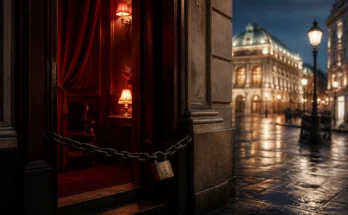
Beneath Vienna’s elegant surface lies a complex and often overlooked aspect of the city’s urban fabric: the concentration of brothels in specific districts.
Understanding why Vienna brothel districts are clustered in certain areas requires a look into historical, legal, social, and economic factors that have shaped this unique distribution.

Historical Roots of Vienna’s Brothel Districts
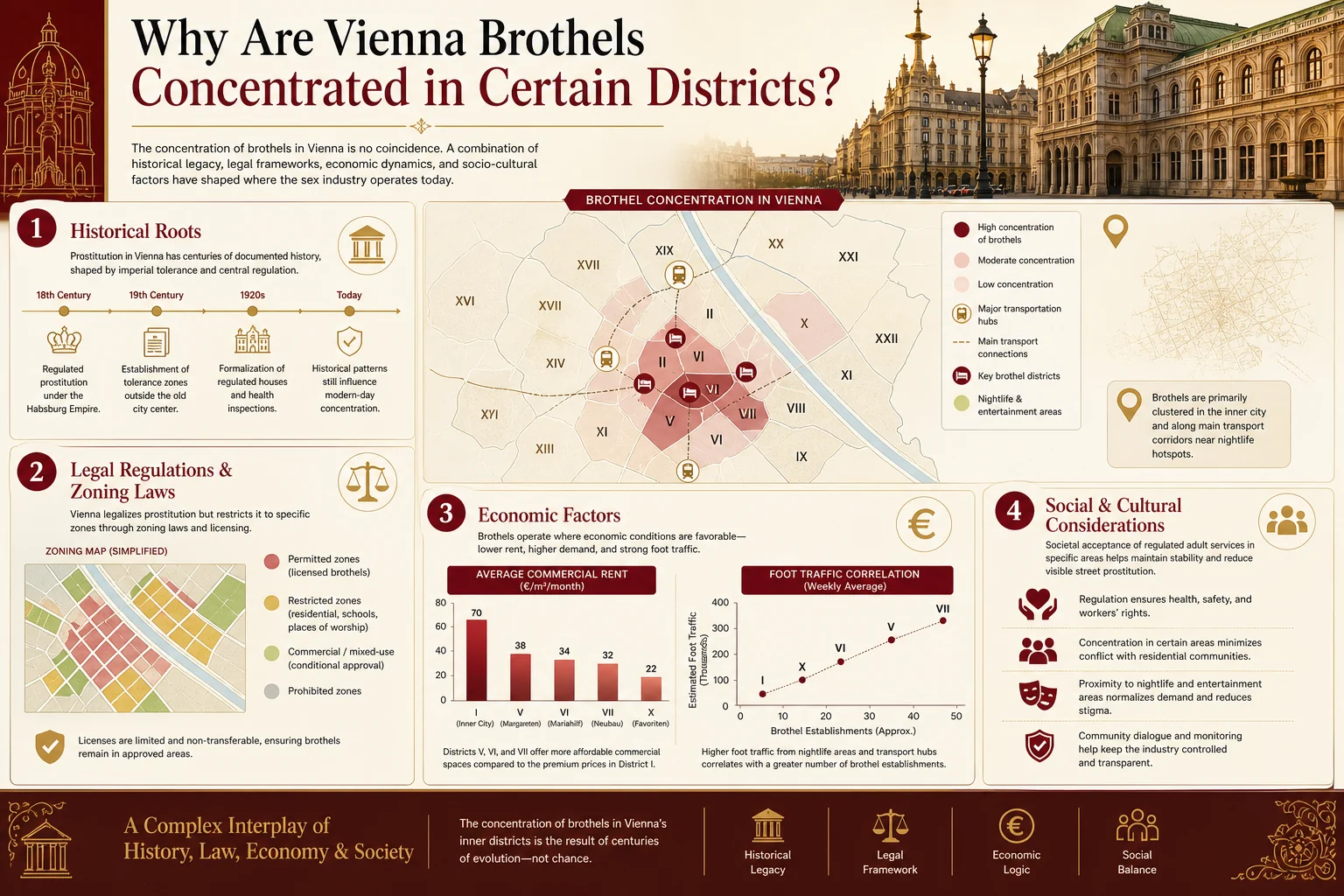
The origins of Vienna’s brothel districts date back centuries. Historically, many European cities designated particular neighborhoods for prostitution to maintain public order and segregate activities considered morally questionable. In Vienna, this tradition has continued over time, with brothels often situated near major transportation hubs or areas with high foot traffic.
During the Austro-Hungarian Empire, prostitution was legal but heavily regulated. Authorities imposed strict zoning laws that confined brothels to specific districts to control the spread of sexually transmitted infections and limit their visibility to the general public. This legacy persists today, influencing where brothels are permitted to operate.
Legal Regulations and Zoning Laws
One of the primary reasons Vienna brothel districts are concentrated is due to the city’s regulatory framework. Prostitution in Austria is legal and regulated, but local governments have the authority to determine where brothels can be located. This often results in brothels clustering in designated zones, which are carefully monitored and controlled.
Vienna’s zoning laws are designed to balance the rights of sex workers with community concerns. Authorities typically avoid allowing brothels in residential neighborhoods or near schools, churches, and parks. Instead, these businesses are grouped in commercial or industrial districts where their presence is less likely to cause conflict.
Furthermore, licensing requirements limit the number of brothels and specify health and safety standards. The concentration in certain districts allows for easier enforcement of these regulations, ensuring that brothels operate legally and safely.
Economic Factors Influencing Brothel Locations
Economic considerations also play a significant role in why Vienna brothels are found in particular districts. Rent prices, accessibility, and the presence of complementary businesses all affect where brothels choose to operate. Districts with lower commercial rents are often more attractive to brothel operators looking to manage costs while maintaining a steady clientele.
Proximity to public transportation is another key factor. Brothels benefit from being easily reachable by both locals and visitors, so districts near train stations, tram lines, or bus stops tend to attract more establishments. This accessibility ensures a consistent flow of clients, which is vital for the economic sustainability of brothels.
Additionally, brothels often cluster near nightlife areas such as bars, clubs, and entertainment venues. This synergy increases foot traffic and creates an environment where adult services are more socially accepted, further encouraging concentration in these districts.
Social and Cultural Considerations
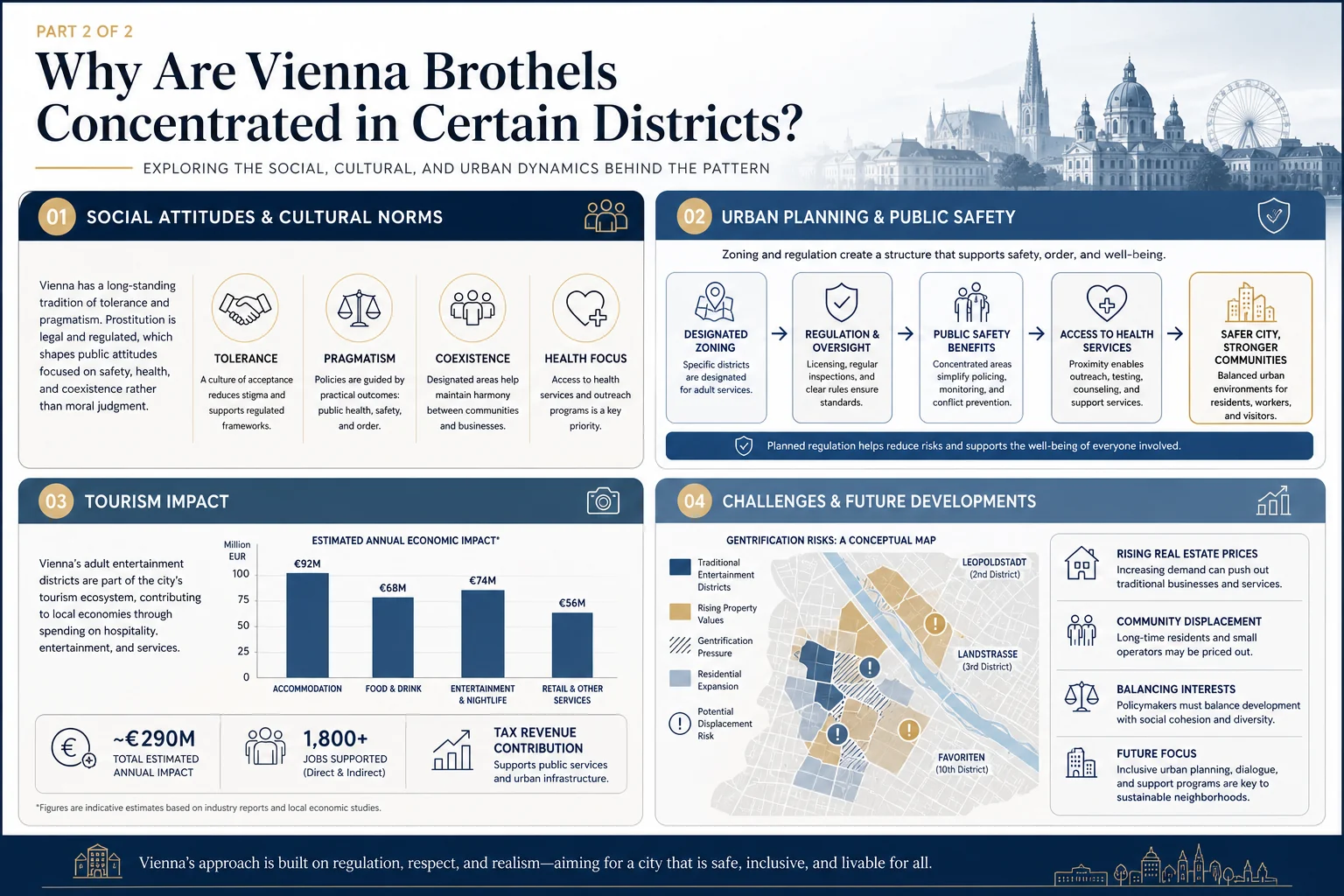
Social attitudes and cultural norms influence the spatial distribution of brothels in Vienna as well. Concentrating prostitution in designated districts helps reduce social stigma and potential conflicts within communities. It creates zones where sex work is more visible and, as a result, more socially accepted or at least tolerated.
These districts can develop their own subcultures, with businesses and individuals accustomed to the presence of brothels. This normalization reduces tensions and helps protect the rights and safety of sex workers by fostering a supportive environment. In contrast, attempts to scatter brothels throughout residential areas often lead to community pushback and increased marginalization of sex workers.
Urban Planning and Public Safety
Urban planners and city officials view the concentration of brothels in certain Vienna districts as a practical approach to public safety and order. By managing the location of brothels, authorities can better monitor health standards, prevent illegal activity, and provide support services to sex workers.
These districts often have dedicated health clinics, outreach programs, and law enforcement presence specialized in addressing the unique needs of the sex industry. This infrastructure is easier to organize and maintain when brothels are clustered rather than dispersed randomly throughout the city.
Tourism and the Role of Brothel Districts
Vienna attracts millions of tourists each year, and some of these visitors seek adult entertainment. Concentrated brothel districts offer a discreet and accessible option for tourists interested in exploring this aspect of the city safely and legally. By keeping brothels within specific neighborhoods, the city can provide clear information and guidance, helping visitors navigate this part of Vienna’s nightlife responsibly.
Moreover, these districts contribute to the local economy beyond the brothels themselves, supporting nearby restaurants, hotels, and transportation services. This economic ripple effect underscores the practical benefits of having Vienna brothel districts concentrated in certain areas.
Conclusion
The concentration of Vienna brothels in certain districts is the result of a complex interplay of historical precedent, legal regulation, economic realities, and social considerations. By zoning brothels in specific areas, Vienna manages to uphold public order, protect sex workers, and integrate this sector into the broader urban environment.
As the city evolves, these districts will continue to reflect Vienna’s pragmatic approach to one of its oldest professions.