
Brothels have long been a subject of fascination, curiosity, and controversy. Despite their historical and cultural presence across many societies, numerous misconceptions continue to circulate about what brothels really are and how they function.
These brothel myths often stem from stereotypes, sensationalized media portrayals, and a general lack of understanding. In this article, we’ll unpack some of the most common brothel myths that are completely wrong and shed light on the realities behind these establishments.

Myth 1: Brothels Are Illegal Everywhere
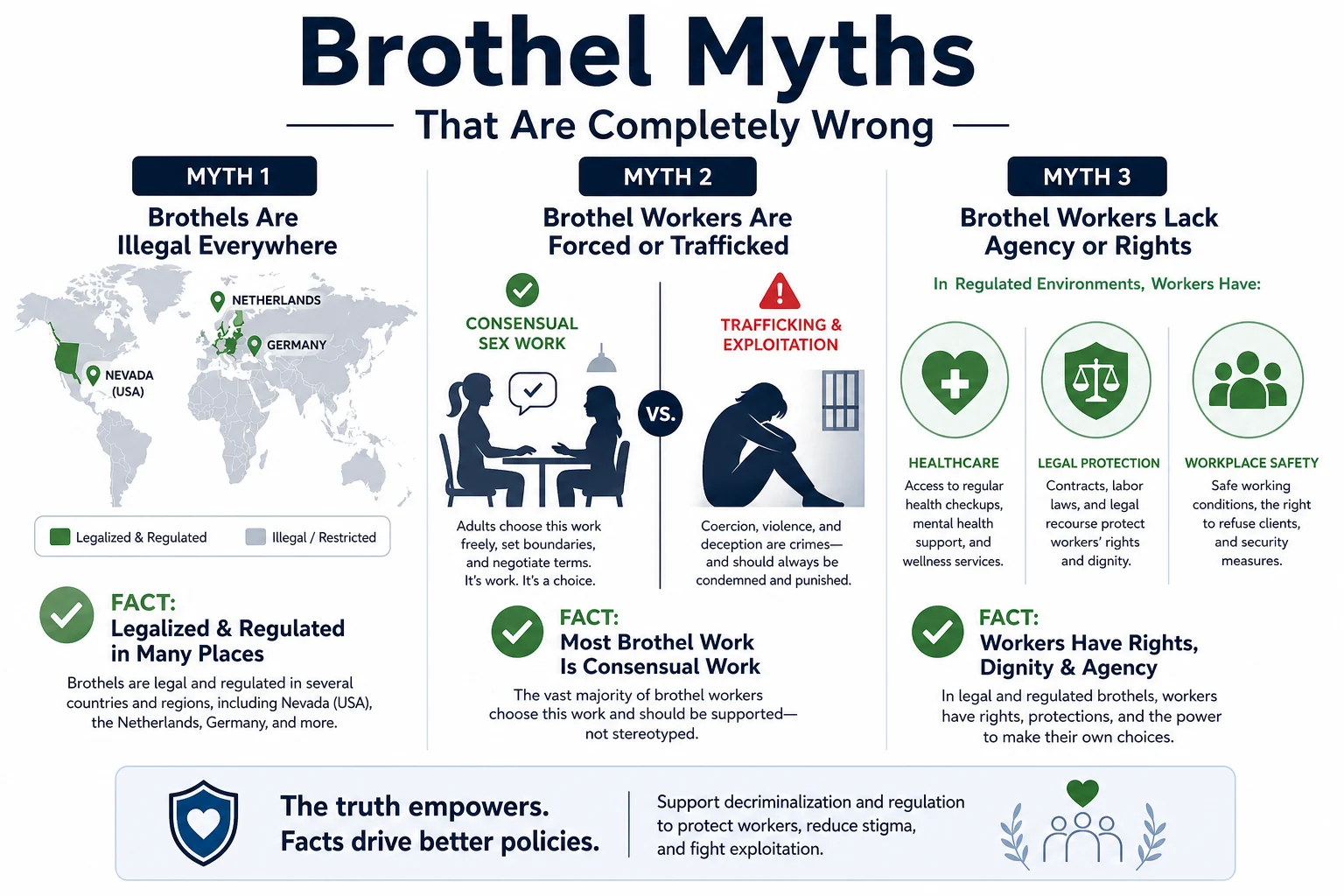
One of the most widespread myths is that brothels are illegal in every country. While it’s true that many places have strict laws against prostitution and operating brothels, this is far from a universal rule. In fact, several countries and regions have legalized and regulated brothels to ensure safer working conditions for sex workers.
For example, parts of Nevada in the United States allow licensed brothels, and countries like the Netherlands, Germany and Austria have comprehensive legal frameworks that govern brothel operations. Legalization typically comes with health and safety regulations designed to protect both workers and clients. This approach contrasts with outright criminalization, which can push the industry underground, increasing risks for everyone involved.
Myth 2: Brothel Workers Are Forced or Trafficked
Another damaging myth suggests that all individuals working in brothels are victims of human trafficking or coercion. While human trafficking remains a serious and abhorrent crime, conflating all sex work with trafficking is misleading and harmful.
Many sex workers choose their profession voluntarily, viewing it as a legitimate way to earn a living. In regulated brothels, workers often have the ability to negotiate terms, set boundaries, and access support services. Recognizing the difference between consensual sex work and exploitation is crucial for creating policies that protect vulnerable individuals without stigmatizing those who choose this line of work.
Myth 3: Brothel Workers Lack Agency or Rights
This myth goes hand-in-hand with the previous one. People often assume that brothel workers have no control over their work or are denied basic rights. The reality is much more complex.
In regulated environments, workers frequently enjoy legal protections similar to those in other industries. These protections can include access to healthcare, legal recourse in cases of abuse, and workplace safety standards. Even in places where brothels operate illegally, many sex workers advocate for their rights and organize to improve their conditions.
Understanding that brothel workers can be empowered individuals rather than passive victims challenges harmful stereotypes and fosters a more respectful dialogue around sex work.
Myth 4: Brothels Are Unsafe and Unsanitary
Many people assume brothels are inherently dangerous or unhygienic places. While this perception is common, it is largely outdated and often inaccurate, especially where brothels are subject to health and safety regulations.
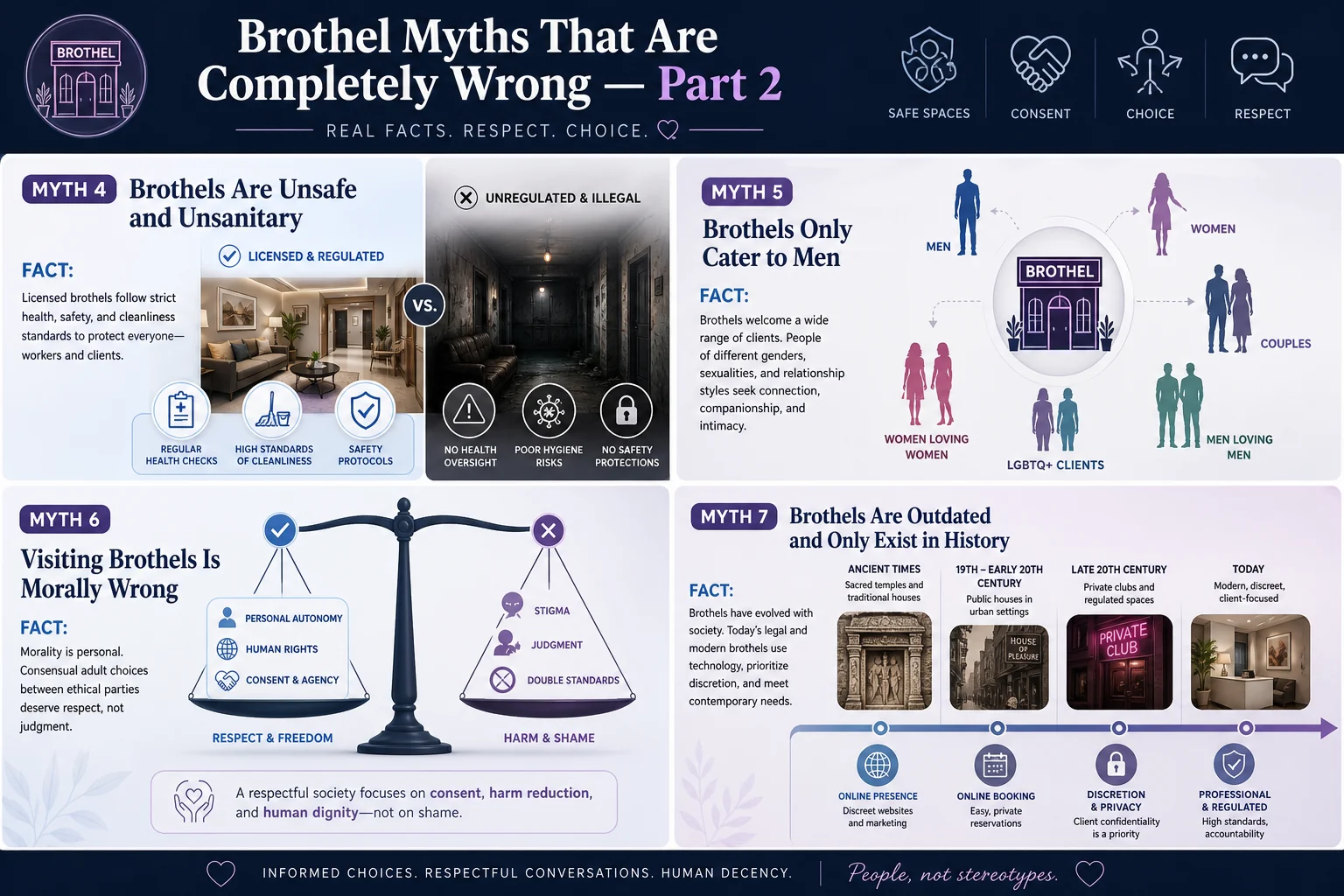
Licensed brothels typically adhere to strict cleanliness standards and require regular health checks for workers. These measures help prevent the spread of sexually transmitted infections and create a safer environment for both workers and clients. Conversely, illegal or unregulated establishments might lack these safeguards, which is why legalization and regulation are often advocated by health professionals.
Myth 5: Brothels Only Cater to Men
The stereotype that brothels serve only male clients is another misconception. While the majority of clients in many places might be men, brothels can cater to a diverse clientele, including women and couples.
Some brothels specialize in providing services tailored to women or non-binary clients, emphasizing inclusivity and respect. Recognizing the diversity of clients helps break down narrow assumptions about who uses these services and why.
Myth 6: Visiting Brothels Is Morally Wrong
Morality around brothels and sex work varies significantly depending on cultural, religious, and personal beliefs. However, labeling brothel visitation as inherently immoral ignores the human rights, autonomy, and dignity of consenting adults.
Sex work, when consensual and safe, is a form of labor. Like any other service, it involves negotiation, boundaries, and mutual respect. Societies that criminalize or stigmatize brothel visits often do so based on subjective moral standards rather than objective harm. Shifting the conversation toward harm reduction, worker rights, and personal autonomy can lead to more nuanced and compassionate discussions.
Myth 7: Brothels Are Outdated and Only Exist in History
Some people believe brothels are relics of the past, no longer relevant in modern society. This couldn’t be further from the truth. Brothels still exist worldwide, adapting to changing legal landscapes, cultural norms, and technological advances.
In fact, some brothels have embraced modern business practices, including online booking, discreet marketing, and enhanced customer service. They continue to play a role in the sex industry, providing regulated spaces that can offer safety compared to street-based sex work.
Conclusion: Understanding Brothel Myths to Promote Realistic Perspectives
Brothel myths are often rooted in fear, misinformation, and stigma. Dispelling these myths is essential for fostering a more informed and compassionate understanding of sex work and the people involved in it. Recognizing the legal diversity, respecting the agency of workers, and acknowledging the complexities beyond stereotypes helps create a foundation for better policies and social attitudes.
By moving past outdated assumptions, we can support initiatives that prioritize health, safety, and human rights, ultimately benefiting everyone in society.