Vienna has a regulated industry surrounding adult entertainment, including brothels. Understanding the brothel regulations in Vienna is essential for anyone involved in or interested in this sector, whether from a business, legal, or social perspective.
This article provides an in-depth look at who regulates brothels in Vienna, the legal framework, and how these regulations impact operators and workers in the city.

Legal Framework Governing Brothels in Vienna
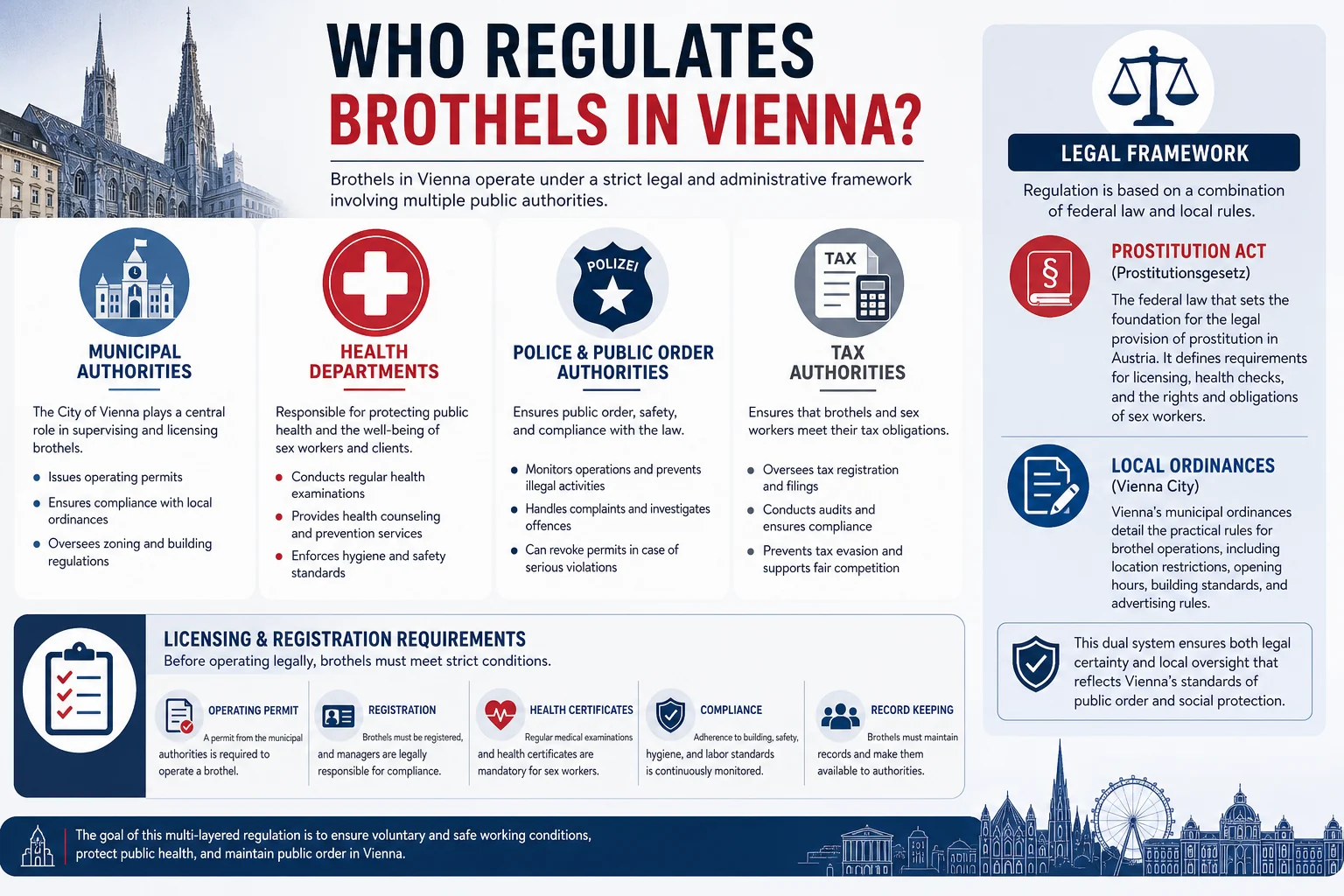
Brothel regulations in Vienna are primarily shaped by Austrian federal laws combined with specific local ordinances. The principal legal foundation is the Prostitution Act (Prostitutionsgesetz), which establishes general rules for the operation of prostitution services, including brothels. This law aims to ensure the safety, health, and rights of sex workers while regulating the business side of the industry.
In addition to federal legislation, each Austrian state, including Vienna, has the authority to implement its own regulations that address local concerns such as zoning, operating hours, and public order. Vienna’s regulations are designed to balance the needs of the community with the rights of individuals working in or running brothels.
Who Regulates Brothels in Vienna?
The regulation of brothels in Vienna involves multiple governmental bodies working in coordination. The primary regulators include:
- Municipal Authorities: The City of Vienna plays a crucial role in regulating brothels through its municipal offices. These authorities oversee licensing, zoning, and compliance with local health and safety standards. The Municipal Department for Social Affairs and Health (Magistratsabteilung 15) is particularly involved in ensuring that brothels meet hygiene and safety requirements.
- Health Departments: Regular health inspections are mandatory for brothel operators and workers. The health department conducts these inspections to prevent the spread of sexually transmitted infections and to verify compliance with health regulations.
- Police and Public Order Authorities: The Vienna police enforce laws related to public safety and order, including oversight of brothel activities to prevent illegal practices such as human trafficking, exploitation, or unlicensed operations. They work closely with other agencies to monitor compliance and investigate complaints.
- Tax Authorities: The financial regulation of brothels falls under the Austrian tax authorities, who ensure that all brothel operators comply with tax laws, including proper business registration and income reporting.
Licensing and Registration Requirements
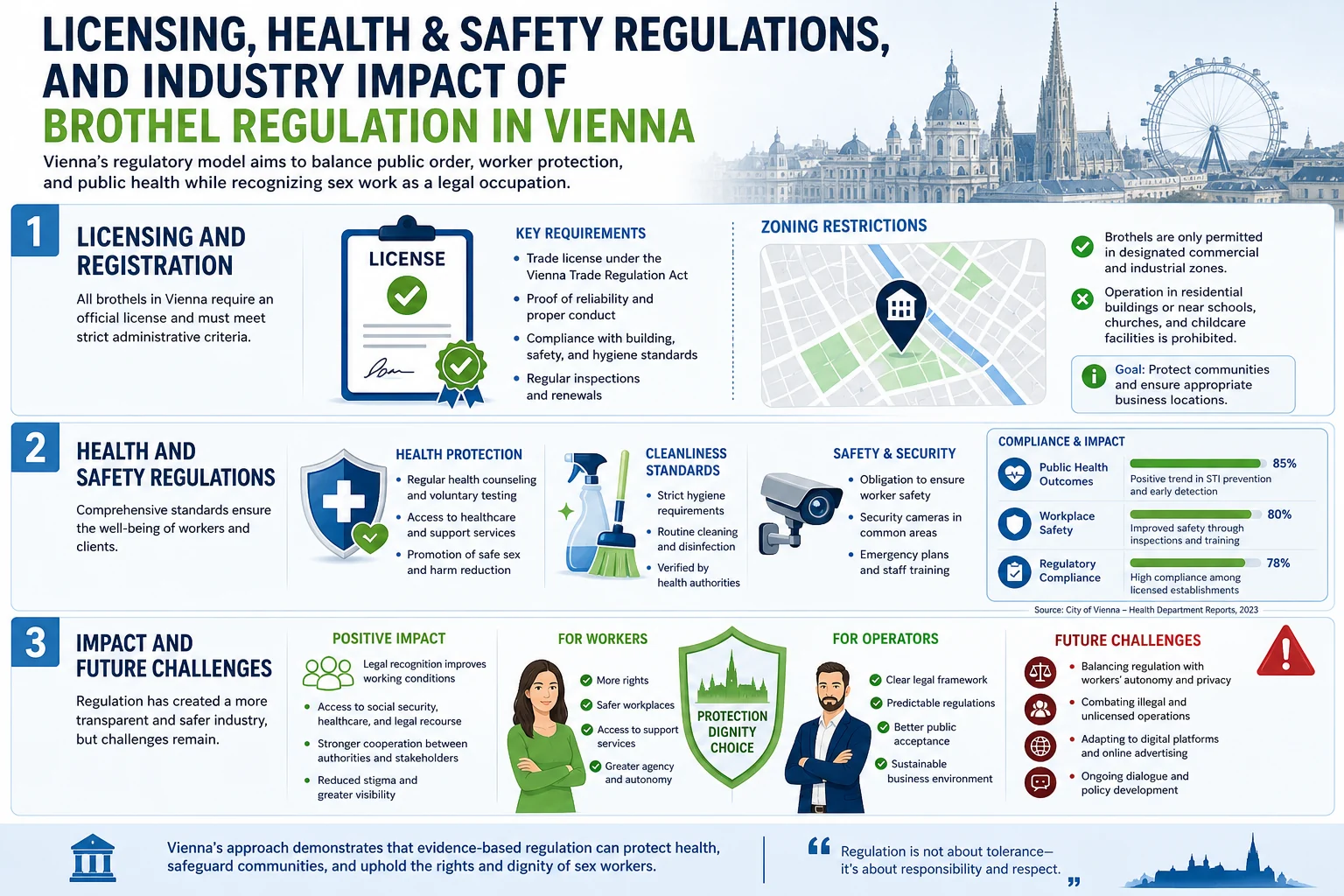
One of the key aspects of brothel regulations in Vienna is the licensing process. Operators must obtain a license to run a brothel legally in the city. This involves submitting detailed applications that demonstrate compliance with zoning laws, building standards, and health regulations.
Licenses are only granted to applicants who meet strict criteria, ensuring that brothels operate in designated areas away from schools, churches, and residential neighborhoods. This zoning policy helps minimize potential conflicts and maintains public order.
In addition to the operator’s license, sex workers themselves must also register with local authorities. Registration is intended to protect workers’ rights and provide access to health services. Workers receive confidential health checks and can benefit from social support programs.
Health and Safety Regulations
Health and safety regulations are a cornerstone of brothel regulations in Vienna. Regular medical examinations are required for sex workers, and brothel operators must maintain sanitary conditions at all times. This includes proper ventilation, cleanliness, and availability of protective materials such as condoms.
In addition to physical health, safety measures also cover workplace security. Brothels are required to implement policies that prevent violence and exploitation. Surveillance systems, emergency protocols, and staff training are often part of these safety measures.
Impact of Regulations on the Industry
The brothel regulations in Vienna aim to create a safe, transparent, and fair environment for all parties involved. By enforcing licensing, health checks, and workplace safety, these rules help reduce illegal activities, protect human rights, and improve working conditions for sex workers.
For operators, compliance with regulations means maintaining a legal status that allows them to conduct business openly and avoid penalties. For sex workers, it ensures access to healthcare, legal protection, and social services. For residents and the wider community, these regulations help reduce nuisances and maintain public order.
Challenges and Future Developments
Despite the comprehensive regulatory framework, challenges persist. Issues such as illegal brothels, human trafficking, and stigma remain significant concerns. Authorities continuously work on improving enforcement and support systems to address these problems effectively.
Future developments may include more digital monitoring tools, improved health services, and enhanced cooperation between different regulatory agencies. Additionally, ongoing public discussions about prostitution laws at the national level could lead to reforms impacting Vienna’s regulatory environment.
Conclusion
Brothel regulations in Vienna are managed through a collaborative effort between municipal authorities, health departments, police, and tax officials. This multi-layered regulatory system ensures that brothels operate legally, safely, and with respect for human rights. Understanding who regulates brothels in Vienna and how these regulations function is crucial for ensuring compliance, protecting workers, and maintaining community standards.
As Vienna continues to evolve, so too will the regulatory landscape surrounding brothels, reflecting changing social attitudes and legal priorities. Staying informed about these regulations helps all stakeholders navigate the complexities of this industry responsibly and ethically.