
Over the past three decades, brothels have undergone significant transformations, influenced by social attitudes, legal changes, and technological advancements. Understanding brothel history provides insight into how these establishments have evolved from secretive and often illegal operations to more regulated and openly acknowledged businesses in some parts of the world.
This article explores the key changes in brothels over the last 30 years, highlighting shifts in legality, management, technology, and public perception.

Legal Shifts and Regulation
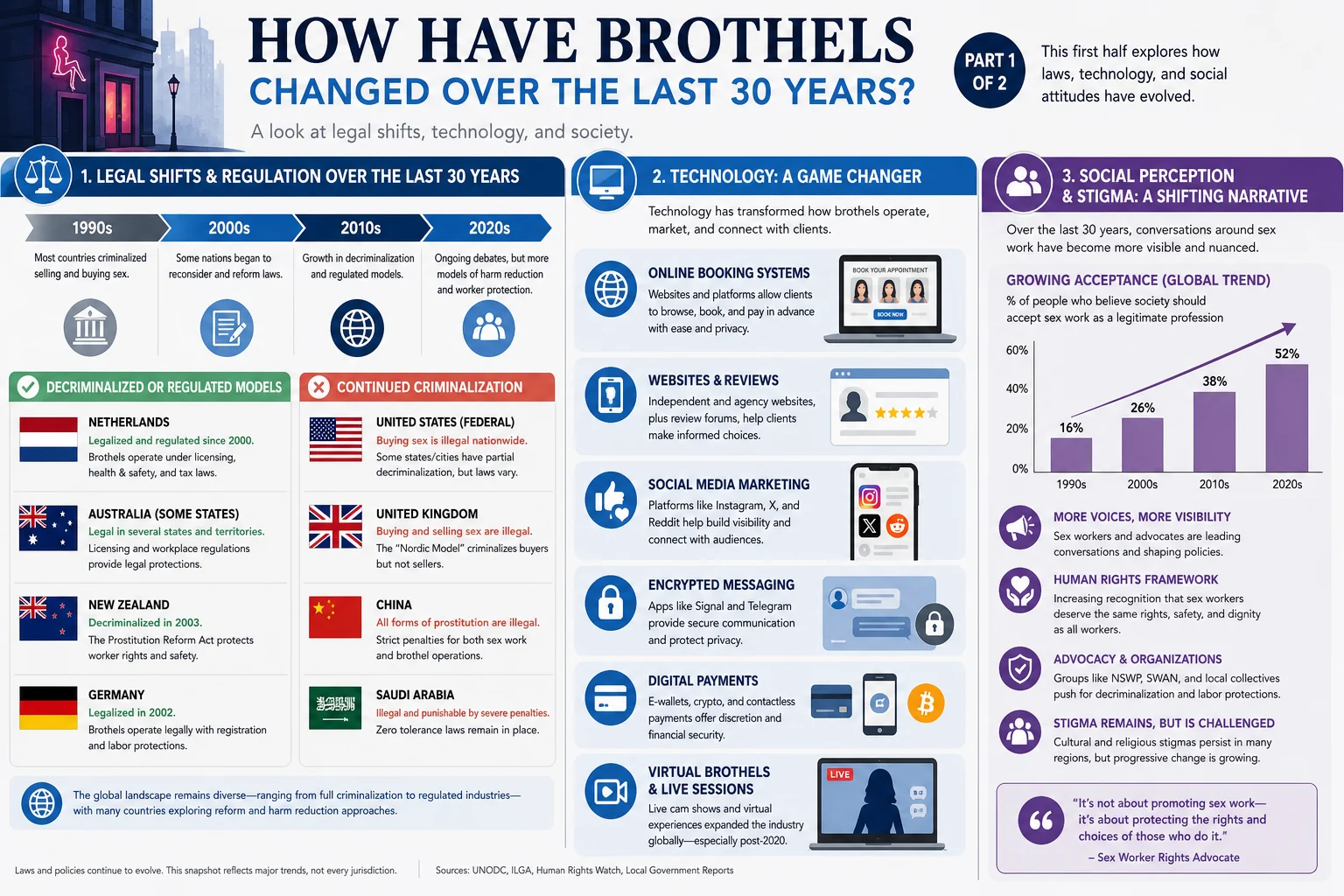
One of the most notable changes in brothel history over the past 30 years has been the shift in legal frameworks in many countries. While brothels were traditionally illegal or operated in the shadows, some regions have moved towards decriminalization and regulation. For example, in countries like the Netherlands and parts of Australia, brothels are now legal and operate under strict government oversight. This change has helped improve the safety and rights of sex workers, ensuring access to healthcare, legal protections, and safer working environments.
Conversely, in other areas, the approach has been more conservative, with laws continuing to criminalize brothel operations or enforcing strict bans. These differing legal landscapes have influenced how brothels operate, with some turning to online platforms or private networks to avoid detection. In places where brothels remain illegal, their operations tend to be more clandestine and less regulated, which can increase risks for workers and clients alike.
The Role of Technology in Modern Brothels
Technological advancements have played a pivotal role in reshaping brothel history, transforming how these businesses function and interact with clients. Thirty years ago, brothels primarily relied on physical storefronts and word-of-mouth to attract customers. Today, many have embraced the internet and digital communication to reach a broader audience.
Online booking systems, websites, and social media have allowed brothels to operate more efficiently and discreetly. Clients can now browse profiles, read reviews, and communicate with workers before making appointments. This transparency has contributed to greater client satisfaction and trust. Moreover, technology has facilitated safer transactions, with encrypted messaging and digital payments reducing risks associated with cash handling.
Virtual brothels and online escort services have also emerged, offering digital companionship and live video sessions. While not the traditional brothel experience, these services reflect an evolving industry responding to modern desires and technologies.
Changes in Social Perception and Stigma
Over the past three decades, societal attitudes towards brothels and sex work have shifted significantly. While stigma still exists in many cultures, there is a growing movement toward recognizing sex work as legitimate labor deserving of respect and protection. Activists and organizations advocating for sex workers’ rights have brought attention to issues such as exploitation, trafficking, and discrimination.
Public discourse now often includes conversations about consent, autonomy, and safety, which were largely absent from brothel history narratives in the past. This change has encouraged more open discussions and increased visibility for workers’ experiences. As a result, some brothels have adopted more worker-centered policies, focusing on health, empowerment, and fair treatment.
Design and Atmosphere: From Secrecy to Comfort
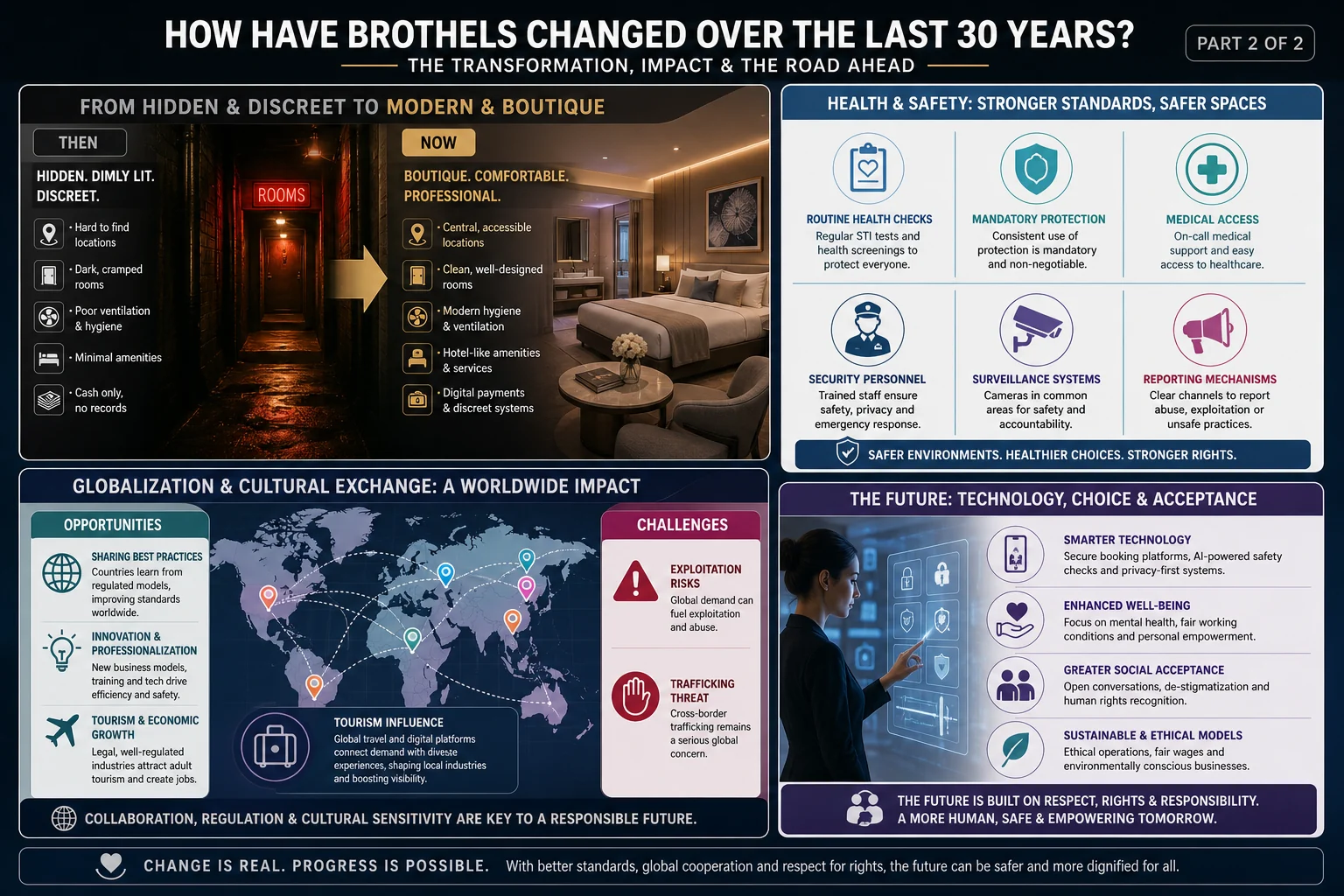
The physical environment of brothels has also evolved. Traditionally, brothels were often hidden, dimly lit, and designed to be discreet due to their illegal or semi-legal status. In contrast, modern brothels, especially in legalized contexts, prioritize comfort, aesthetics, and hygiene. Many establishments now resemble boutique hotels or upscale lounges rather than the stereotypical seedy venues of the past.
This shift not only improves the client experience but also reflects a greater respect for the workers who spend time in these spaces. Clean, well-maintained environments equipped with modern amenities contribute to a safer and more professional atmosphere, helping to normalize the business within the community.
Health and Safety Improvements
Health and safety standards in brothels have seen remarkable improvements compared to 30 years ago. In regions where brothels are regulated, routine health checks, mandatory use of protection, and access to medical care have become standard. These measures help reduce the transmission of sexually transmitted infections (STIs) and protect both workers and clients.
Additionally, many brothels now have protocols and support systems in place to address violence and abuse. Security personnel, surveillance systems, and clear reporting mechanisms contribute to creating safer environments. These developments are crucial in transforming brothels from risky ventures into responsible businesses focused on the welfare of all parties involved.
The Impact of Globalization and Cultural Exchange
Globalization has influenced brothel history by facilitating cultural exchanges and the spread of new business models. For instance, styles of brothels from one country have inspired innovations in others, blending traditional approaches with modern practices. International tourism also plays a role, with some brothels catering specifically to foreign visitors, adapting services and environments to meet diverse expectations.
This interconnectedness has brought both opportunities and challenges. On one hand, it has exposed sex work to broader scrutiny and helped spread best practices. On the other hand, it has sometimes led to exploitation and trafficking concerns, underscoring the need for vigilant regulation and ethical standards.
Conclusion: The Future of Brothels
Brothels have changed dramatically over the last 30 years, reflecting broader social, legal, and technological trends. Understanding brothel history reveals a complex narrative of adaptation, resilience, and progress. While challenges remain, especially in areas where brothels are still illegal or stigmatized, the overall trajectory points toward increased regulation, improved safety, and greater acceptance.
As society continues to evolve, so too will brothels, potentially integrating new technologies and approaches to further enhance the experiences of workers and clients alike. The ongoing dialogue about sex work and brothel history will remain vital in shaping policies and perceptions for years to come.