
Sex work in Austria is a legally regulated profession, and understanding the rights of sex workers is essential for ensuring their safety, dignity, and access to health and social services. While the profession is legal in many parts of the country, sex workers still face challenges related to stigma, legal restrictions, and social exclusion.
This article explores the current legal framework, protections, and rights that sex workers have in Austria, providing valuable information for anyone interested in the topic.

Legal Status of Sex Work in Austria
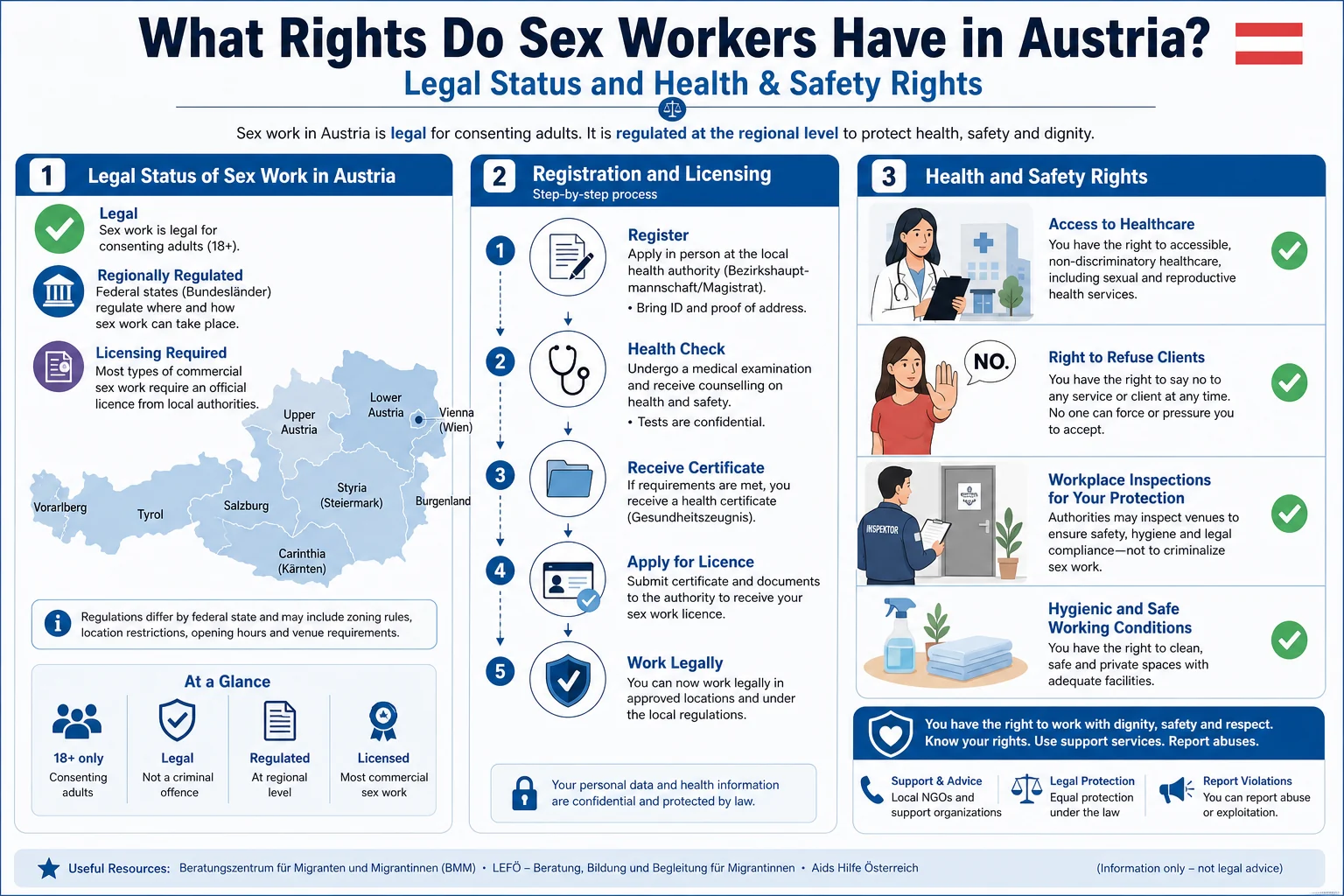
Sex work in Austria is legal, but it is regulated at the regional level, meaning that laws and regulations can vary between federal states (Bundesländer). Prostitution is generally recognized as a legitimate form of work, but operators and workers must comply with specific rules to operate legally.
One key aspect of legal sex work in Austria is the requirement for registration and obtaining a license in many regions. This registration process often includes health checks and tax obligations. The aim is to improve working conditions, reduce exploitation, and control public health risks.
Registration and Licensing Requirements
Sex workers in Austria usually need to register with local authorities to work legally. This registration process includes providing personal information and undergoing regular health examinations to ensure that workers are free from sexually transmitted infections (STIs).
Licensing is more commonly required for brothel operators and managers, who must meet strict criteria related to hygiene, safety, and employment conditions. These regulations help protect sex workers from unsafe working environments and illegal activities such as human trafficking.
Health and Safety Rights
Access to healthcare is a fundamental right for sex workers in Austria. Registered sex workers benefit from free or subsidized health screenings and treatments related to sexual health.
Additionally, there are strong measures in place to ensure workplace safety. Sex workers have the right to refuse clients and to work in safe, hygienic environments. Authorities often carry out inspections to maintain standards in licensed establishments.
Protection from Exploitation and Violence
Austrian law provides protections to sex workers against exploitation, coercion, and violence. The government actively combats human trafficking and exploitation through law enforcement agencies and social support organizations.
Sex workers have the right to report crimes without fear of prosecution related to their work. Police and social services often work together to offer support and protection to victims of abuse or trafficking.
Employment Rights and Social Benefits
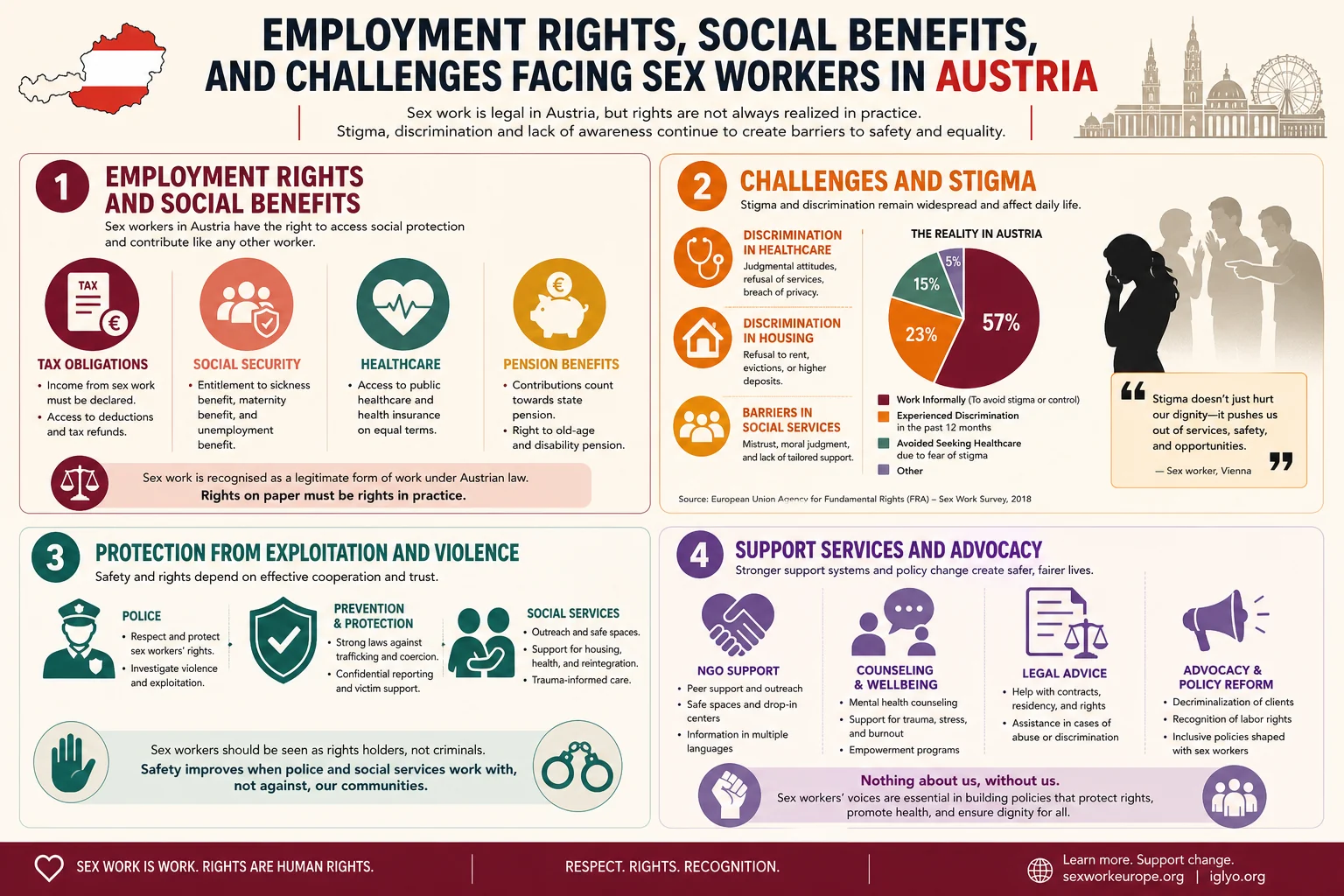
Sex workers who are officially registered are entitled to certain employment rights similar to those in other professions. This includes the right to pay taxes, contribute to social security, and access benefits such as healthcare and pension schemes.
Despite this, many sex workers operate informally due to fear of stigma or bureaucratic hurdles, limiting their access to these benefits. Initiatives by NGOs and the government aim to encourage formal registration to improve workers’ social security coverage.
Challenges and Stigma Facing Sex Workers
While the legal framework supports sex workers’ rights, social stigma remains a significant barrier. Many sex workers face discrimination in healthcare, housing, and social services due to the nature of their work.
This stigma can deter workers from seeking help or registering legally, which in turn exposes them to greater risks. Advocacy groups continue to push for greater public awareness and anti-discrimination measures to improve the situation.
Support Services and Advocacy
A range of organizations in Austria provide support services to sex workers, including counseling, legal advice, health services, and emergency assistance. These organizations play a crucial role in educating workers about their rights and helping them navigate the legal system.
Advocacy groups also campaign for policy reforms to strengthen sex workers’ rights and promote safer working conditions. Their work helps give sex workers a voice in public debates and policy-making processes.
Conclusion
The rights of sex workers in Austria are protected under a legal framework that recognizes sex work as a legitimate profession. Registered sex workers enjoy rights related to health, safety, and social security, while legal measures aim to prevent exploitation and violence.
However, challenges such as regional regulatory differences, social stigma, and barriers to formal registration persist. Continued efforts by government bodies, NGOs, and advocacy groups are vital to ensure that sex workers can fully exercise their rights and access the protections they deserve.
Understanding sex workers’ rights in Austria is essential not only for those directly involved in the profession but also for policymakers, social workers, and the general public to foster a safer, more inclusive society.