When it comes to accommodations, brothel rooms and regular hotel rooms might seem similar at first glance, as both provide private spaces for rest and comfort. However, the purpose and design of brothel rooms differ significantly from those of conventional hotel rooms.
Understanding these differences can shed light on how spaces are tailored to specific needs, services, and clientele, reflecting both functional and cultural distinctions.

Purpose and Functionality
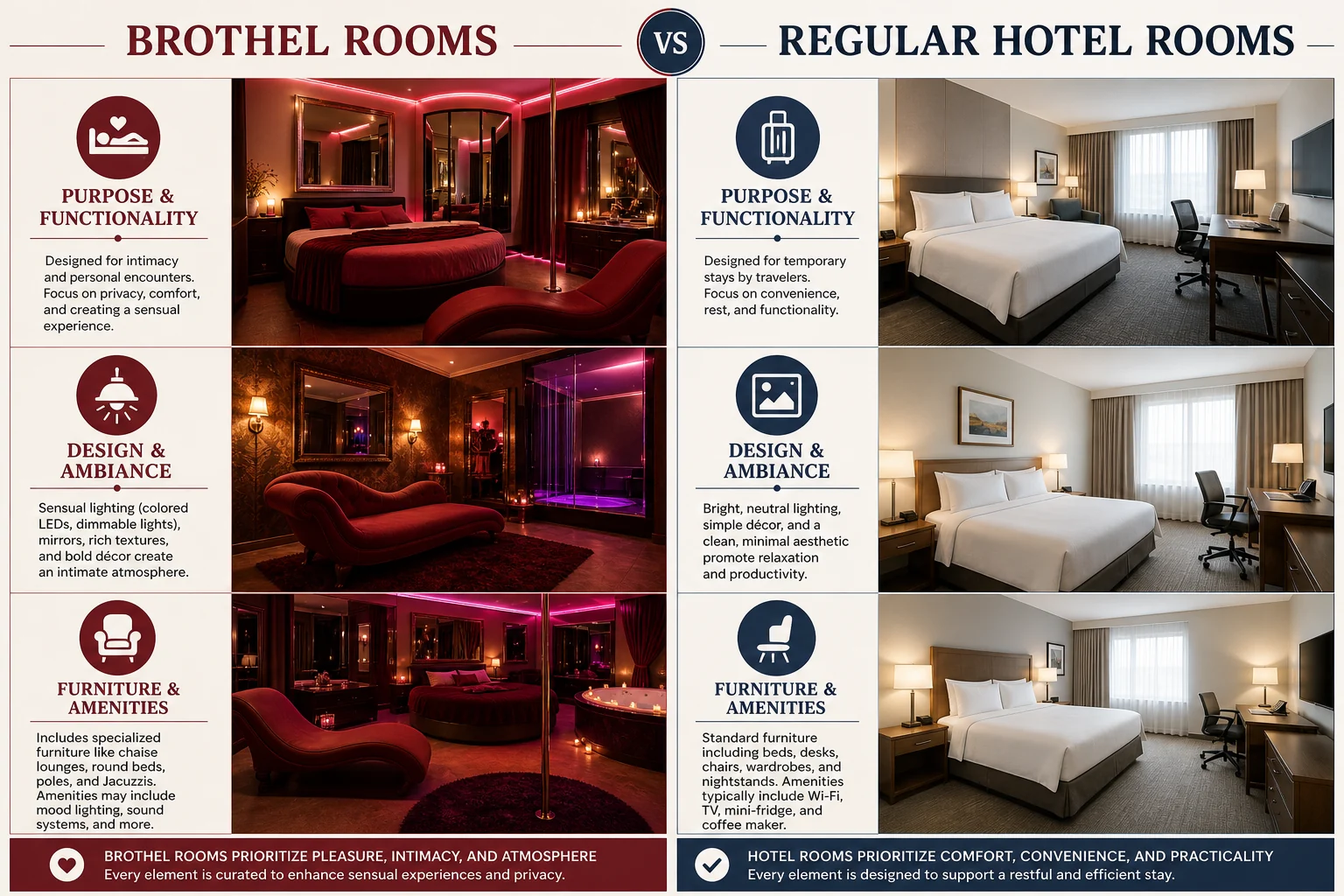
Regular hotel rooms are primarily designed to offer guests a comfortable, private space for sleeping, relaxation, and typical travel needs. They cater to a wide range of visitors, from business travelers to vacationers, emphasizing amenities like a comfortable bed, clean bathrooms, and often extras such as desks, entertainment systems, and mini-bars.
Brothel rooms, on the other hand, serve a very specific function: they are designed to facilitate adult entertainment and services. The layout, furnishings, and features are tailored to support these activities, making the rooms distinct in both form and function. Privacy and discretion are paramount, but the environment also prioritizes comfort and ambiance that aligns with the nature of the service offered.
Design and Ambiance
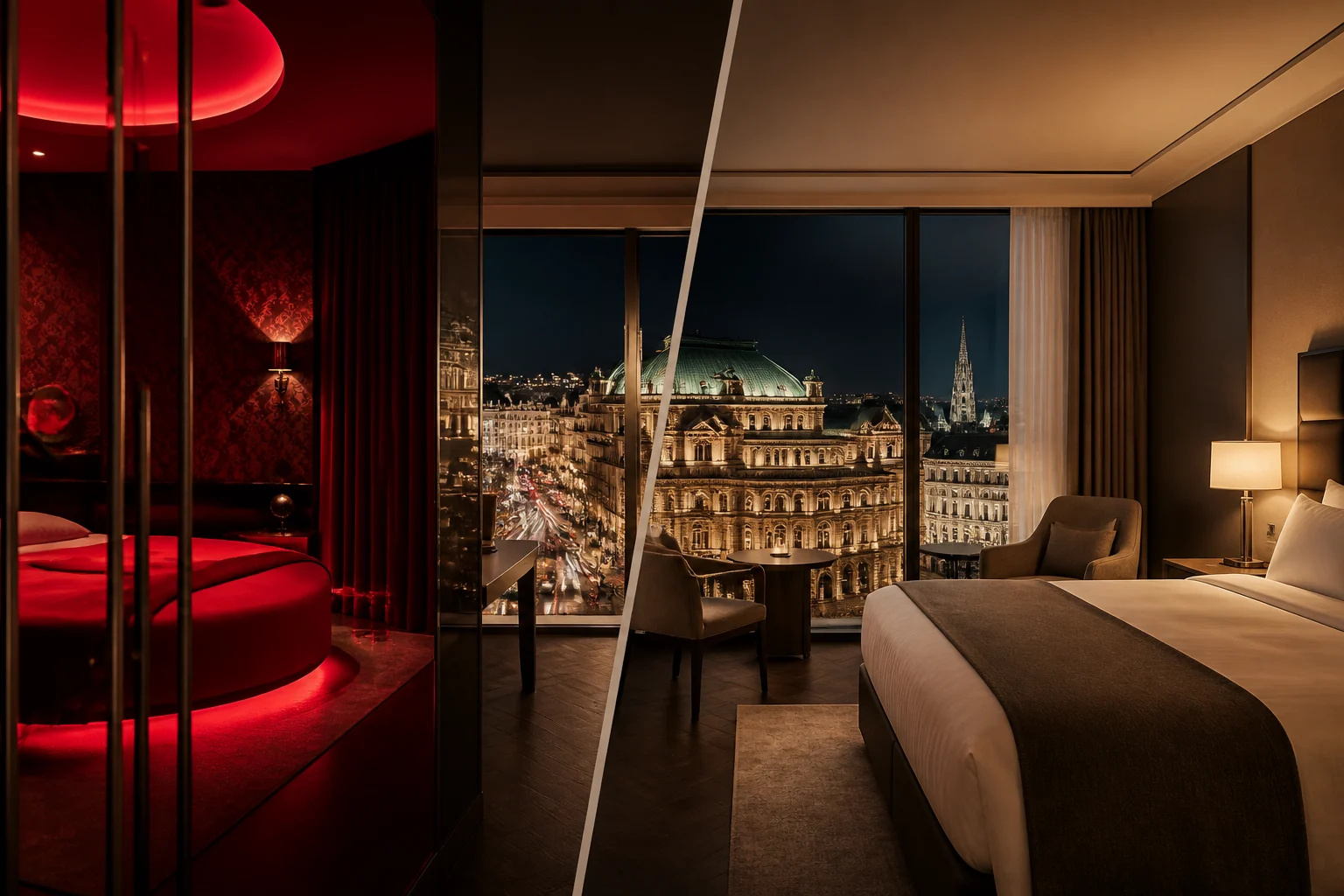
One of the most noticeable differences lies in the design and atmosphere of brothel rooms compared to regular hotel rooms. While hotel rooms often follow a neutral and widely appealing aesthetic, brothel rooms tend to incorporate more sensual and intimate design elements.
Lighting plays a key role: brothel rooms typically feature softer, mood-enhancing lighting such as dimmable lamps, colored LEDs, or strategically placed spotlights that create a warm, inviting atmosphere. In contrast, standard hotel rooms usually have brighter, more practical lighting suitable for reading, working, or general use.
Decor in brothel rooms often emphasizes luxury and sensuality, with plush fabrics, velvet or silk bed linens, mirrors strategically positioned to enhance the experience, and sometimes thematic elements that cater to various tastes. Regular hotel rooms usually prioritize durability and ease of maintenance, featuring simpler decor that appeals to a broad audience without being overly personalized.
Furniture and Amenities
Furniture in brothel rooms is intentionally arranged to support various activities and comfort levels. Beyond the basic bed, these rooms might include specialized furniture such as chaise lounges, padded benches, or even equipment designed for specific services. The bed itself may be larger, softer, or more adjustable than in a typical hotel room.
In contrast, regular hotel rooms focus on functionality for sleeping and working. They often include a desk, chair, nightstands, and sometimes a small seating area. The furniture tends to be standard, designed for versatility and durability rather than specialized use.
Amenities in brothel rooms are also tailored to enhance the experience. This can include high-end sound systems, privacy curtains, stocked mini-bars with discreet packaging, and sometimes extra hygiene products. Regular hotel rooms offer a range of amenities too, but these are generally aimed at comfort and convenience rather than creating a particular mood or setting.
Privacy and Security Measures
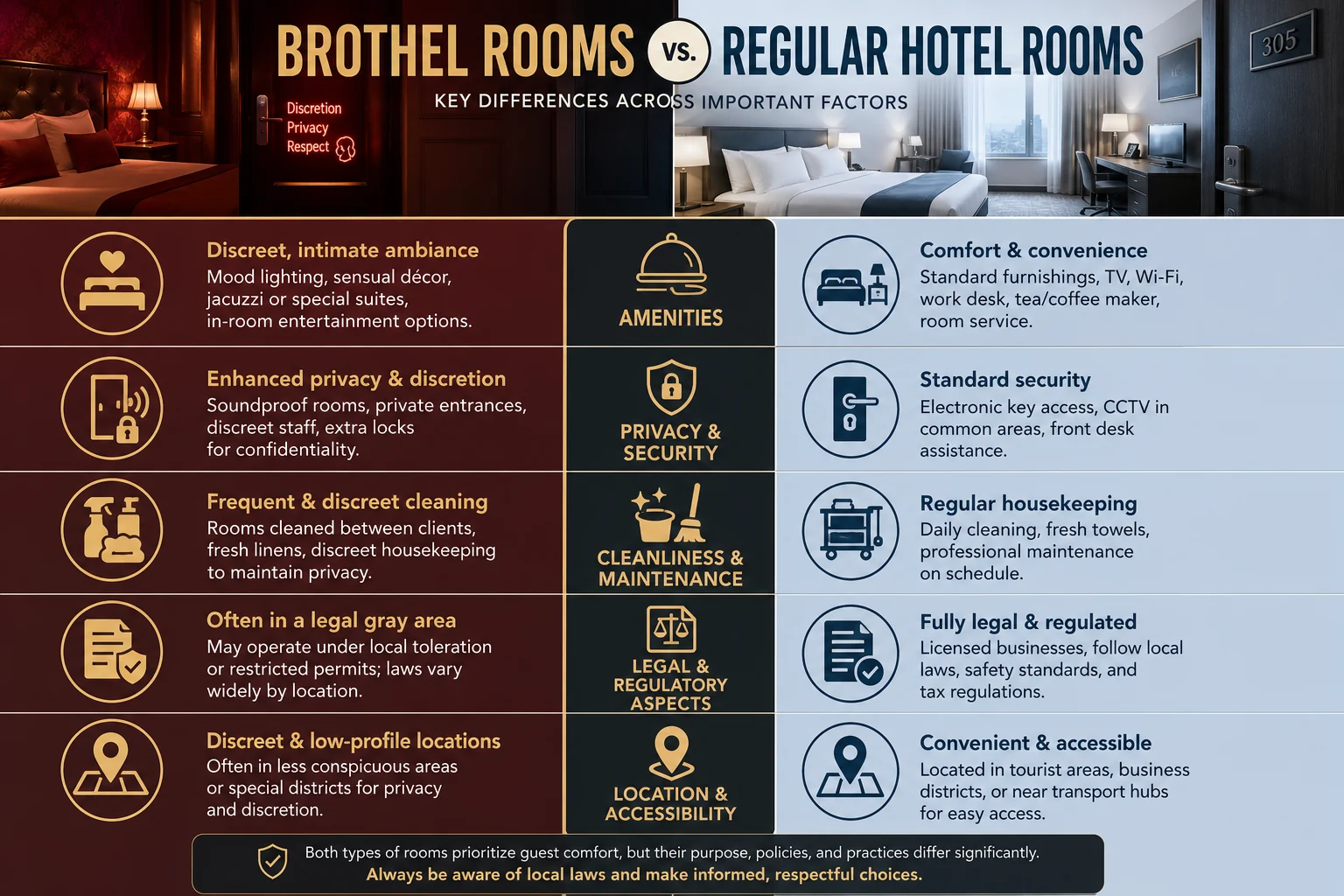
Privacy is a critical factor in the design of brothel rooms. These spaces are often equipped with soundproofing materials to ensure conversations and activities remain confidential. Doors might have enhanced locks or electronic access systems to prevent unauthorized entry, reflecting the sensitive nature of the services provided.
While many upscale hotels also emphasize privacy and security, their focus is often on guest safety, secure access, and comfort rather than the discreet nature of adult services. Soundproofing is less common, and the design of doors and locks tends toward standard hospitality industry practices.
Cleanliness and Maintenance
Both brothel rooms and hotel rooms require high standards of cleanliness, but the protocols can differ due to the nature of use. Brothel rooms are cleaned meticulously between clients with an emphasis on sanitation and hygiene, often using professional-grade disinfectants and sometimes undergoing more frequent or specialized cleaning routines.
Regular hotel rooms follow strict housekeeping standards as well, focusing on cleanliness for guest comfort and health. However, the cleaning procedures reflect general hospitality needs rather than the intense sanitation demands sometimes necessary in brothel environments.
Legal and Regulatory Aspects
Brothel rooms operate within a framework of legal regulations that vary widely depending on the country or region. These regulations influence room design, safety features, and operational standards to ensure compliance with health, safety, and licensing requirements.
Regular hotel rooms are governed by general hospitality and safety regulations, with less specialized oversight related to the activities conducted within the rooms. This regulatory difference impacts how rooms are maintained and what features are included.
Location and Accessibility
Brothels are often located in discreet or specific districts where such businesses are permitted and regulated. Brothel rooms are designed to provide easy access for clients while maintaining a degree of anonymity and discretion. Entrances might be unmarked or blend into the surroundings to avoid unwanted attention.
Hotels are usually situated in more visible, accessible, and tourist-friendly areas, catering to a broad public audience. Their design and layout prioritize convenience and ease of use for all types of travelers, without the same level of concern for discretion as brothels.
Conclusion
While brothel rooms and regular hotel rooms share the fundamental purpose of providing a private space for occupants, their differences are marked by the specific needs and expectations of their users. Brothel rooms emphasize privacy, sensual ambiance, specialized furniture, and rigorous sanitation tailored to adult services. Regular hotel rooms focus on versatility, comfort, and broad appeal, catering to a wide range of guests with varying needs.
Understanding these distinctions highlights how space design adapts to function and clientele, reflecting broader cultural and legal contexts. Whether for travel, leisure, or specific adult services, the room you choose is a reflection of its intended experience and operational purpose.