
Prosecutors in Frankfurt have filed charges against five people accused of running a massive illegal prostitution network across Germany. We’re not talking about a few hidden apartments here — investigators believe the group operated more than 500 illegal brothels spread across the country over roughly three years. The scale of it is pretty hard to wrap your head around.

Normal Apartments, Hotel Rooms — All Secret Brothels
The setup was simple but effective. The two people at the top of the operation — a 43-year-old man and a 35-year-old woman — rented ordinary apartments and hotel rooms all across Germany and quietly turned them into working brothels.
From the outside, nothing looked unusual. Guests checked in, neighbors went about their day, and nobody suspected anything. Inside, women — mostly Chinese nationals without valid residence permits — were brought in and made to work as sex workers.
This Wasn’t Amateur Hour
What stands out about this case is how organized it was. This wasn’t a couple of people improvising. Prosecutors describe a structured operation with real systems behind it.
The group ran a network of phone operators based in China who handled client bookings remotely. Locations were rented in a coordinated way across multiple cities. The 43-year-old man focused on bringing in customers, while the woman went around collecting the daily earnings from the prostitutes working at each location.
Three other people have also been charged as part of the network — a driver who helped keep things running, a woman who let her massage studio be used for sex work, and another woman who helped manage the business side of things. Three of the five suspects are currently being held in pre-trial detention.
The Money Side Is Staggering
On top of everything else, the group is accused of enormous tax fraud. Prosecutors estimate they avoided paying around 3 million euros in taxes and nearly 3.5 million euros in social contributions.
That’s almost 6.5 million euros that never went where it was supposed to go. It gives you a sense of just how much money was flowing through this operation every year.
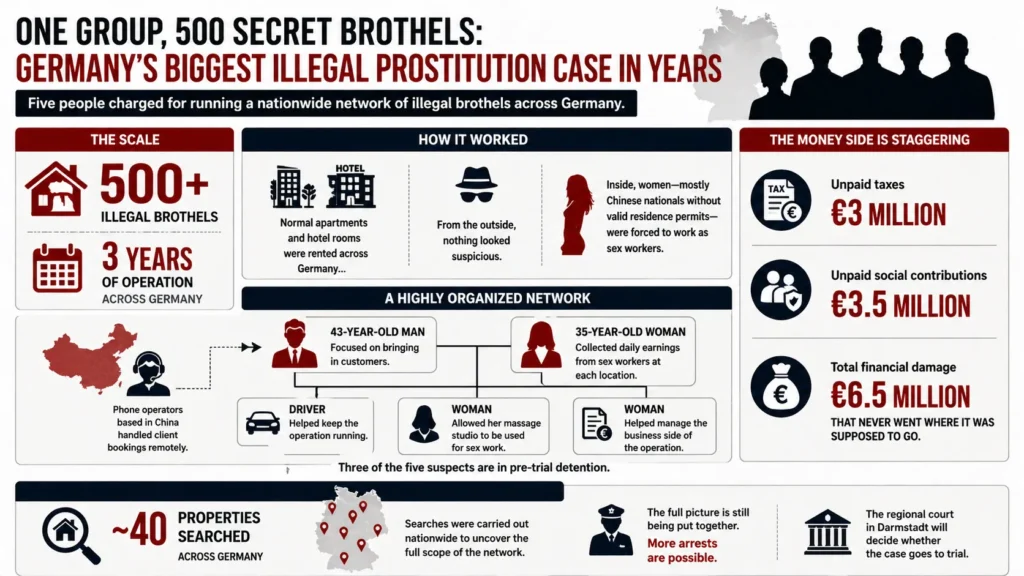
To build the case, investigators searched around 40 properties across Germany. The full picture of the network is still being put together, and authorities haven’t ruled out more arrests. The regional court in Darmstadt will ultimately decide whether the case goes to trial.
Why Hidden Brothels Are Bad for Everyone
It’s easy to think of illegal prostitution as a problem that only affects the people directly involved. But that’s not really true.
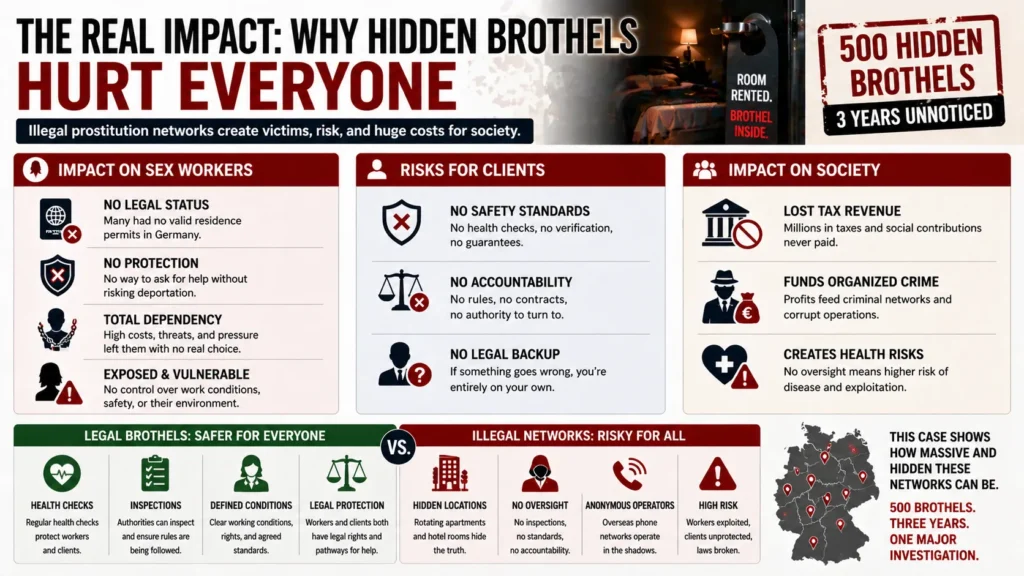
For sex workers, illegal setups are often the worst possible situation. Many of the women in this case had no legal status in Germany, which meant they had no way to ask for help without risking deportation. They had little control over their work, faced high costs, and were completely dependent on the people running the operation.
For clients, there’s no protection either. No rules, no clear expectations, no authority to turn to if something goes wrong. In a legal, regulated brothel there’s at least some structure. In a hotel room booked through a secret phone network in China, you’re entirely on your own.
And for society more broadly, operations like this drain tax money, fuel organized crime, and create health risks because there are no checks or oversight on what’s happening inside.
Legal Brothels Are Just Safer — Full Stop
This case, like so many others, comes back to the same basic point. When sex work happens inside a legal, registered brothel, there are rules. Health checks happen. Working conditions are at least somewhat defined. Authorities can inspect what’s going on.
When it happens in a rotating network of anonymous hotel rooms managed by overseas phone operators — none of that exists. The sex workers are exposed, the clients are unprotected, and the people running it are pocketing millions while paying nothing back into the system.
Five hundred brothels hidden across an entire country. It took three years and a major investigation to catch them.